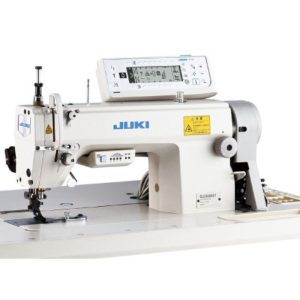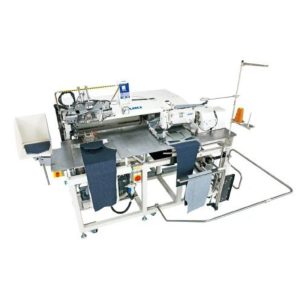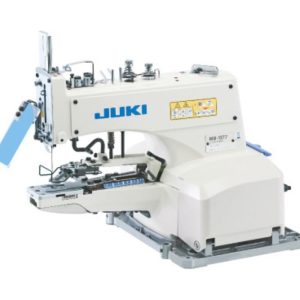
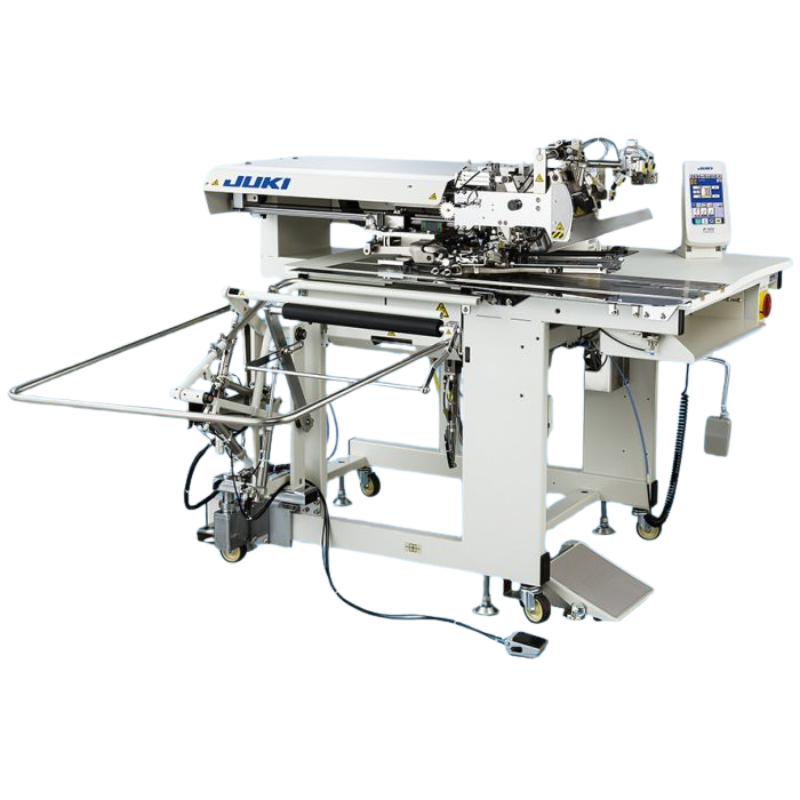
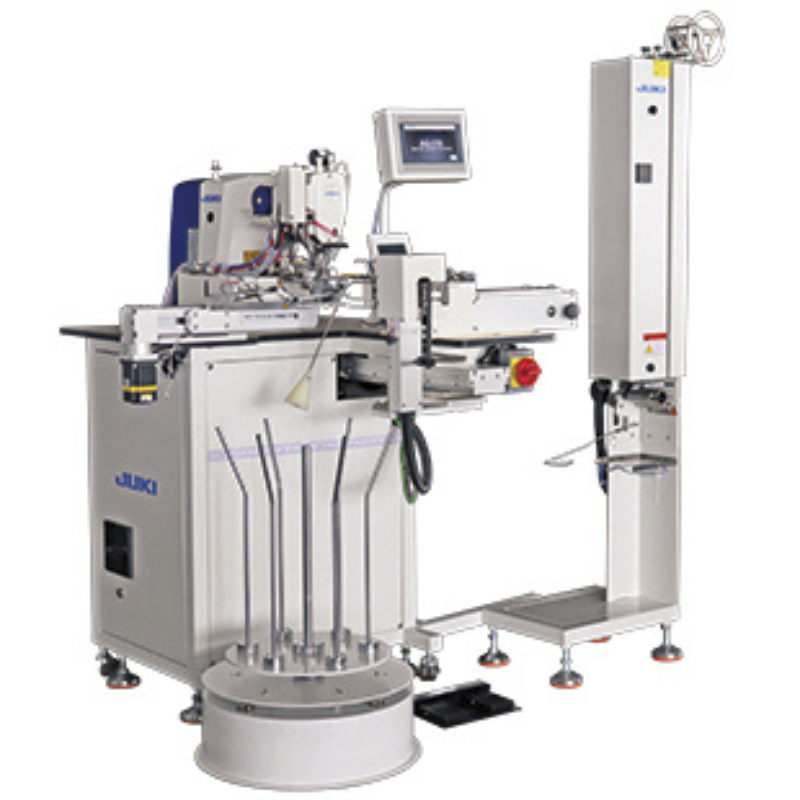
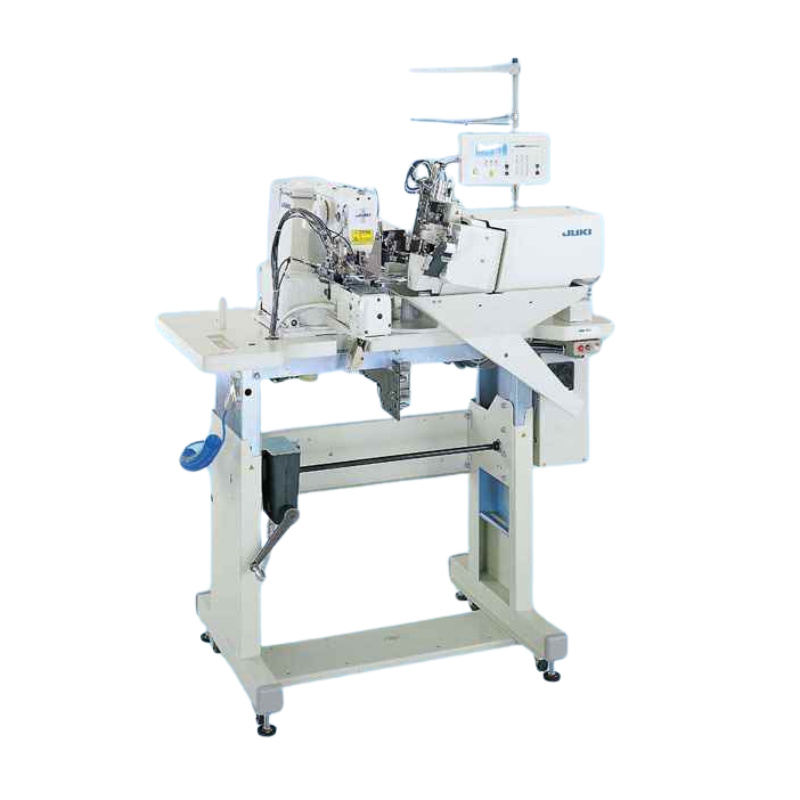
Juki MOL-254 Automatic Machine
Automatic 2-needle Belt-Loop Attaching Machine
The machine time is 1.2 seconds pre belt-loop, which ensures increased productivity. The feed mechanism incorporates a computer-controlled X-Y method to allow the operator to change the number of stitches and sewing sizes.
Description
The number of stitches and size of bartacking
The number of stitches to sew a belt-loop can be switched between; 28-, 36- and 42-stitches, and the bartacking size can be easily changed through the operating panel. What’s more, the user can create his/her own original sewing patterns in addition to the standard ones using JUKI’s PGM-20 programming software developed for computer-controlled sewing machines.
The changeover of cutting method between cross cutting and straight cutting
The applicable loop width for the cross-cutting device is increased. In this model, both the cross-cutting device and the straight-cutting device can now cut loop up to 20mm width.
The machine time is 1.2 seconds per belt-loop (with 28 stitches)
The new machine head specifically developed for belt-loop attaching machines runs at a maximum sewing speed of 2,500rpm and is equipped with a direct-drive system that improves start up performance and shortens sewing time. The belt-loop feeding device is now provided with a halfway standby capability for subsequent belt-loops, and its faster belt-loop supply action shortens the time required for supplying belt-loops and helps speed up the machine time to 1.2 seconds per belt-loop (with 28 stitches).
With the improved consistency in belt-loop supply action and re-try capability, the machine down time is substantially reduced
Belt-loops are fed out by the conventional gear-roller feeding mechanism and also drawn out by the new drawing mechanism on the clamp device. Supported by these two mechanisms, the folding fork catches “curled” or “creased” belt-loops every time and supplies them to the head. In addition, the sensor of the clamp device detects the presence/absence of belt-loops. If it detects a faulty belt-loop feed, the clamp device automatically repeats the clamping action. Since the operator doesn’t have to operate the set-back switch, less time is lost.